Trust at a glance
A calm layout, real photos of the location and the people, the services named the way patients say them, and the practical facts (hours, insurance, languages, parking, telehealth) where they can be found in ten seconds.
Clinics, community health and private practices
A person looking for care arrives with a practical question, a private concern and very little patience for a confusing site. TurnKey builds pages that feel calm and credible, and intake paths that turn that visit into a booked appointment.
TurnKey builds websites, runs SEO and sets up online intake flows for Phoenix-area clinics, community health organizations and private practices that need a site to earn trust and move a visitor to a booked appointment in the same visit. Websites start at $2,500 and SEO starts at $1,400 per month, month to month, with the Prisma Care project in Phoenix as the worked example on this page.
Scope and price
Every project is quoted on scope after a short call. The "from" figures are TurnKey's published starting prices, and the second row describes the scope of a real Phoenix project you can open in the portfolio, shown with today's published pricing as an illustration, not the historical price of that project.
Swipe or scroll horizontally to view every column.
| Project type | What is included | Timeline | Price |
|---|---|---|---|
| New practice or clinic site | One page per service line with a plain-language summary at the top, provider profiles, insurance and cost page, a contact form that asks for no health details, a booking path into your scheduling tool, accessibility pass, GA4 events for calls, directions and bookings, Search Console, launch | 6 to 8 weeks, including clinical review | From $2,500 |
| SEO and conversion work on an existing site (Prisma Care) | Technical SEO audit, keyword research around real care searches, homepage and eight service pages optimized with one H1 each, Organization and Service schema, Google Business Profile and directory cleanup, GTM and GA4 events, an online booking path with site-wide New Patient calls to action, two campaign landing pages, a password-protected reporting dashboard | About ten weeks, late March to June 2, 2026 | Quoted on scope; ongoing SEO from $1,400 per month |
| Nonprofit clinic with Google Ad Grants | Everything above as scoped, plus the Ad Grant application, Search campaigns inside Google's grant rules, landing pages and conversion reporting | Grant campaigns live within the first month after approval | Ad Grants management from $600 per month; application and campaign setup quoted separately |
| Website support after launch | WordPress and plugin updates, backups, form and booking-link checks, content edits, accessibility rechecks when pages change | Month to month | Month to month, no contract |
Accessibility is a published standard, not a matter of taste. The W3C's Web Content Accessibility Guidelines (WCAG) 2.2, a W3C Recommendation dated 12 December 2024, "covers a wide range of recommendations for making Web content more accessible," and it is the document most healthcare accessibility policies point to. Source: W3C, Web Content Accessibility Guidelines (WCAG) 2.2.
Read the Prisma Care case study · See the Phoenix website cost guide (2026) · Nonprofit websites and Ad Grants
The problem
Most clinic websites fail in one of two directions. Some are all trust and no action: a warm photo, a mission statement, provider bios, and a phone number buried on a contact page that is only answered during business hours. Others are all action and no trust: a booking widget on a page that never explains what the service is, who it is for, or what it costs, so the visitor leaves to ask a friend instead.
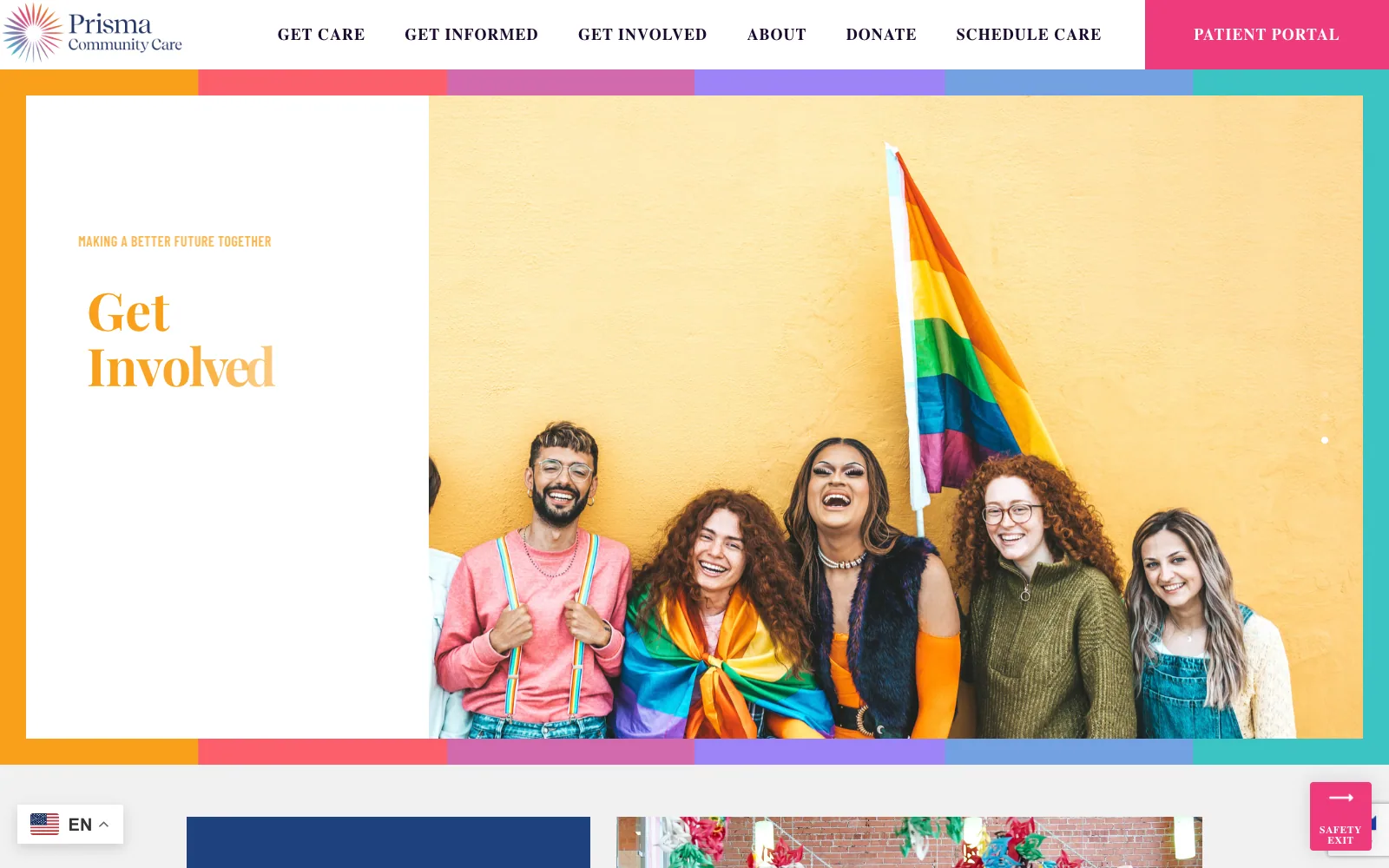
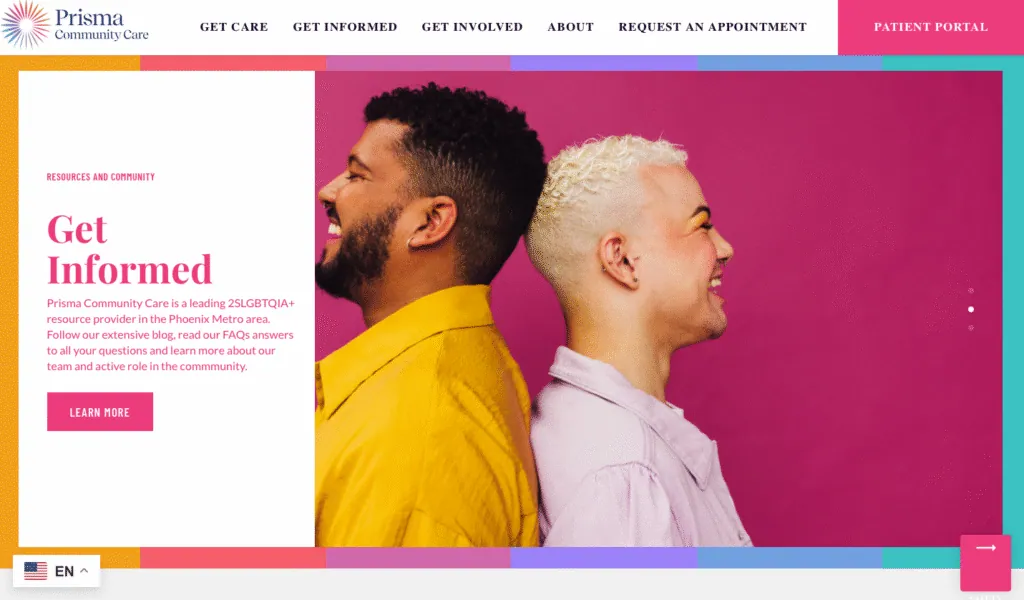
Prisma Care, a Phoenix community health organization, is the example we use because the project had to do both. The homepage puts Get Care, Schedule Care and the Patient Portal in the first row. Each of the eight Get Care service pages explains one service in plain language with a short summary near the top. And the intake flow was rebuilt so a person who decides to get care can book the appointment in the same visit, without a phone call during work hours.
TurnKey Website Design is a Tempe, Arizona web agency founded in 2015 and led by owner Ryan Kee, rated 5.0 on 16 Google reviews as of October 2026. Clients own their finished site, domain, hosting account and analytics. Websites from $2,500. Local SEO from $1,400 per month, month to month.
What a healthcare site has to get right
None of these is a design flourish. Each one is a place where a real visitor either books care or gives up.
A calm layout, real photos of the location and the people, the services named the way patients say them, and the practical facts (hours, insurance, languages, parking, telehealth) where they can be found in ten seconds.
Contrast, keyboard navigation, one heading order per page, labeled fields, alt text, captions, and no text locked inside images. We build to WCAG 2.2 and recheck when pages change, because the people who need it most are often the ones in the most pain.
The principle is simple: the website explains, it does not diagnose or store. A contact form asks for a name, a way to reach you and a preferred time. Symptoms, history and insurance details belong in the portal or booking tool your organization already runs under its own vendor agreement. Analytics tags stay off pages where a visit itself would say something private.
A New Patient call to action on every page that opens the scheduler your clinic chooses, with reminders and rescheduling handled by that tool. For Prisma Care this replaced a manual request flow and was wired to the clinic's calendar.
What it is, who it is for, what to expect at the visit, what it costs or which insurance applies, and how to book. One H1, a short summary at the top, and Service schema so search engines and AI systems can tell the pages apart.
GTM and GA4 events for calls, directions, appointment actions and bookings, and for a larger organization a dashboard that leadership, the board and grant writers can open without asking anyone.
SEO for a clinic
Healthcare search is specific. People do not search for a clinic; they search for PrEP, STI testing, a new patient primary care appointment, a counselor who takes their insurance, a dentist open on Saturday. So the SEO work starts with keyword research around real care searches in the Phoenix area, then gives each one a page that answers it. For Prisma Care that meant the homepage and eight Get Care pages, each with its own title, headings, summary and schema.
Around the pages sits the entity work: a correct Google Business Profile, cleaned-up directory listings, and clear separation between the organization and any related entities that confuse search engines. Then two campaign landing pages (Primary Care and HIV Services) that serve both ads and organic entry, and a reporting dashboard connected to live GA4 and Search Console data. No ranking promises, no outcome claims; the page reports delivery, and so does the case study.

The worked example
A community health organization whose site had to rank for specific care searches, explain each service clearly and let a visitor book in the same visit. Work started at the end of March 2026 and launched June 2, 2026. The case study reports delivery, not outcomes.
How a healthcare project runs
The extra step is the review round with your clinical and compliance leads. It is built into the timeline so it never becomes the reason the launch slips.
Which services you offer, how patients book today, which scheduling and portal tools you run, who signs off on copy, and what the compliance checklist says. You get a scope, a timeline and a price before anything starts.
The page map, one page per service with the summary at the top, a privacy-respecting contact form, the booking path wired to your tool, and plain-language drafts from your materials for clinical review.
Managed hosting, the pages, schema, GTM and GA4 events, an accessibility check against WCAG 2.2, Search Console, QA on real phones, then launch with a walkthrough for the office.
Keyword work around real care searches, service-page optimization, profile and directory upkeep, landing pages when a campaign needs one, and a dashboard your leadership can open. From $1,400 per month, cancel any month.
FAQ
A website is not something that gets certified, and TurnKey is not a law firm, so we do not make that claim. We build the site so it never has to hold protected health information: pages explain services, the contact form asks only for a name, a way to reach you and a preferred time, and anything sensitive goes through the booking tool or patient portal you already run under your own vendor agreement. Analytics tags stay off pages where a visit itself would imply something private. Your compliance lead has the final say.
Treat it as required. Patients using screen readers, keyboards or a cracked phone are a real share of your visitors, and WCAG 2.2 is the standard most policies point to. TurnKey builds to it: contrast, keyboard navigation, one heading order per page, labeled fields, alt text, and no information carried only in an image.
Yes, and it is usually the biggest single improvement. For Prisma Care the project replaced a manual request flow with an online booking path connected to the clinic's calendar, with reminders, rescheduling and site-wide New Patient calls to action. The booking tool is always the client's choice; we wire the site to it.
Related: Prisma Care case study
We structure it; your clinicians own it. TurnKey writes the page skeleton (what the service is, who it is for, what to expect, cost and insurance, how to book), drafts plain-language copy from your materials, and your clinical lead reviews every sentence. Pages make no outcome claims.
Websites start at $2,500 and every project is quoted on scope after a short call. Four or five service lines, a booking path and an accessibility pass sit above the floor because each service page is written and reviewed on its own. SEO on an existing site is a separate program from $1,400 per month, month to month.
Related: Phoenix website cost guide
A new practice site usually takes 6 to 8 weeks, because clinical review adds a round. The Prisma Care SEO and conversion project started at the end of March 2026, launched June 2, 2026, and promoted four more client-approved pages on July 2, 2026.
It can lower the cost. Eligible nonprofits qualify for up to $10,000 per month in free Google Search advertising through the Google Ad Grant, plus discounted software and nonprofit hosting pricing. TurnKey manages Ad Grants from $600 per month and runs a free benefits check first.
Related: Nonprofit websites and Ad Grants
You own the site, the domain, the hosting account and the analytics from day one, and TurnKey hands over every login on request. Support and SEO are month to month with no contract, so there is nothing to unwind.
Next step
Which services you offer, which booking and portal tools you run, and who reviews the copy. A short call gives you a scope and a price, and the clinical review round is built into the timeline from day one.
Ryan Kee replies, usually the same business day.
Not ready for a call? Request a free website and local search check.